
Cricket Bat Grains Explained: What 5, 7, and 10 Grains Really Mean
You pick up a bat, run your fingers down the face, and count the lines. Those lines are grains, and they tell a real story about the wood. But most players guess what they mean. This guide clears it up in plain language.
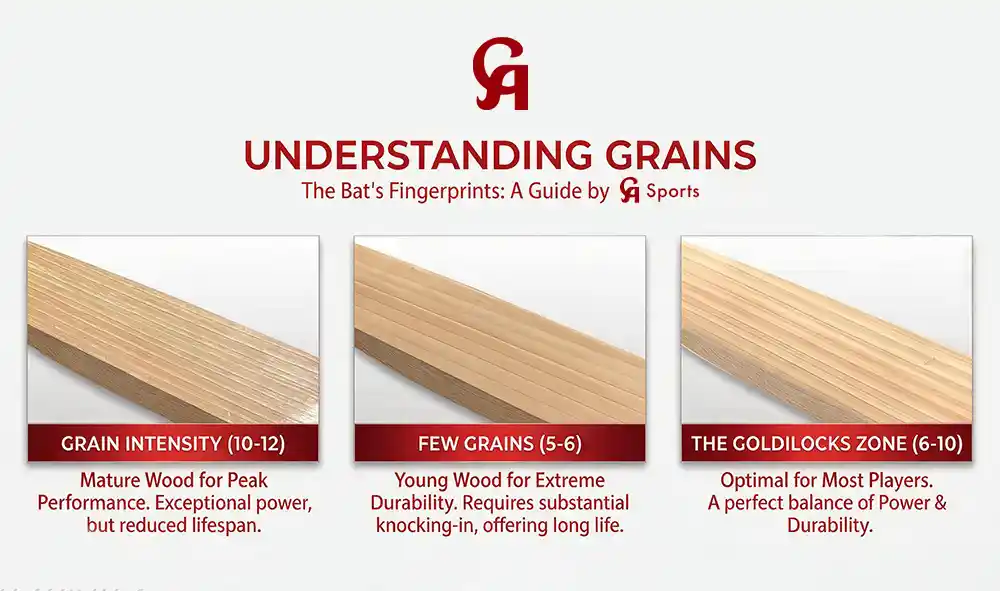
In short, grains are the vertical lines on a cricket bat's face, and each grain roughly represents one year of growth in the willow tree. Fewer grains (5–7) usually mean a younger, more durable bat, while more grains (10+) point to older wood that performs faster but can be more fragile.
At CA Sports, we shape thousands of cricket bats every year in Sialkot, and we ship them worldwide. So we see how much grain count shapes a buyer's choice. Let's break it down.
What Are Grains on a Cricket Bat?
Grains are the straight lines you see running from the toe to the shoulder of the blade. They form as the willow tree grows, one line for each growing season. Cleft after cleft, they act as tree rings turned sideways.
You only find meaningful grains on natural, unbleached English willow bats. This wood comes from the Salix alba caerulea tree, prized for its light weight and springy feel. Kashmir willow shows grains too, but they read differently because the wood is denser and heavier.
Grains matter most on cricket bats built for the hard ball. That fibrous, springy structure is what gives a good bat its "ping."
Does One Grain Equal One Year?
As a rule of thumb, yes. One grain usually reflects about one year of tree growth. So a blade with ten grains often comes from an older willow than one with five.
But treat this as a guide, not a law. Grain spacing changes with soil, climate, and where the cleft sits in the trunk. Two bats with the same grain count can still feel completely different in your hands.
What Do 5 to 7 Grains Mean?
A bat with 5 to 7 grains comes from a younger, tighter willow. The fibres sit closer together, so the wood is firmer and tougher out of the box.
Here is what that gives you:
- Longer lifespan. Denser fibres resist cracking, so the bat lasts more seasons.
- More knocking-in time. You need to prepare it properly before heavy use.
- Great value. These bats cost less while still delivering solid power.
We often steer junior players, club cricketers, and buyers on a budget toward this range. You trade a little instant ping for real durability, and that is a smart deal for most people.
What Do 8 to 10 Grains Mean?
Bats in the 8 to 10 grain band sit in the sweet spot. The willow is mature enough to perform well, yet firm enough to hold up over time.
Many serious club and semi-professional players pick this range. You get a fast surface, a clean sound off the middle, and a reasonable lifespan. If you want one bat that balances power and durability, start here.
What Do 10+ Grains Mean?
Now for the premium tier. A bat with 10, 12, or more grains comes from older, well-seasoned willow. The fibres are broad and open, which allows the blade to compress and rebound quickly.
This means:
- Faster performance: More rebound off the face, so the ball flies.
- Less knocking-in: The wood is often more responsive early.
- Shorter lifespan: Open grains can crack sooner under heavy hitting.
Professionals love these bats because they chase peak performance, and they replace bats often. If you play at the top level and want maximum ping, this is your range.
Do More Grains Mean a Better Bat?
No. This is the biggest myth in the game. Grain count is one clue, not the full grade.
A skilled batmaker judges the whole cleft: grain straightness, even spacing, blade weight, pickup, and how well the willow presses. A clean 7-grain bat can outperform a poorly pressed 12-grain one. So look at the whole bat, not just the lines.
Straight, evenly spaced grains matter more than the raw number. Wavy or patchy grains can signal weaker willow, whatever the count.
How to Choose the Right Grain Count
Match the bat to your game, not to a number on a shelf. Ask yourself three quick questions.
- How often do you play? Heavy use rewards durable, lower-grain hardball bats.
- What is your budget? Fewer grains give a strong value; more grains cost more.
- What level do you play? Pros lean high-grain; most amateurs do better mid-range.
If you are still unsure, pick up the bat and check the balance. A blade that feels light and lively in your hands beats a "perfect" grain count every time.
Quick Grain Guide
- 5–7 grains: Young willow, most durable, needs more knocking-in. Best for juniors, clubs, and value buyers.
- 8–10 grains: Balanced power and life. Best for regular and semi-pro players.
- 10+ grains: Older willow, fastest ping, shorter life. Best for elite players.
6. FAQ
How many grains should a good cricket bat have?
Most players do well with 6 to 10 grains. Fewer grains last longer, while more grains perform faster. Choose based on your level and how often you play.
Do more grains make a bat more powerful?
Not always. More grains can mean faster rebound, but pressing, weight, and grain straightness matter just as much. A well-made mid-grain bat can outperform a poor high-grain one.
Why do some bats have very few grains?
Fewer grains come from younger willow with tighter fibres. This makes the bat firmer and more durable, which is ideal for junior and club cricketers.
Are English willow bats better than Kashmir willow?
English willow is lighter and springier, so it offers more power and cleaner grains. Kashmir willow is heavier and tougher, making it a strong budget choice.
Do grains affect knocking-in time?
Yes. Low-grain bats usually need more knocking-in, while high-grain bats often play faster because the willow is more responsive.
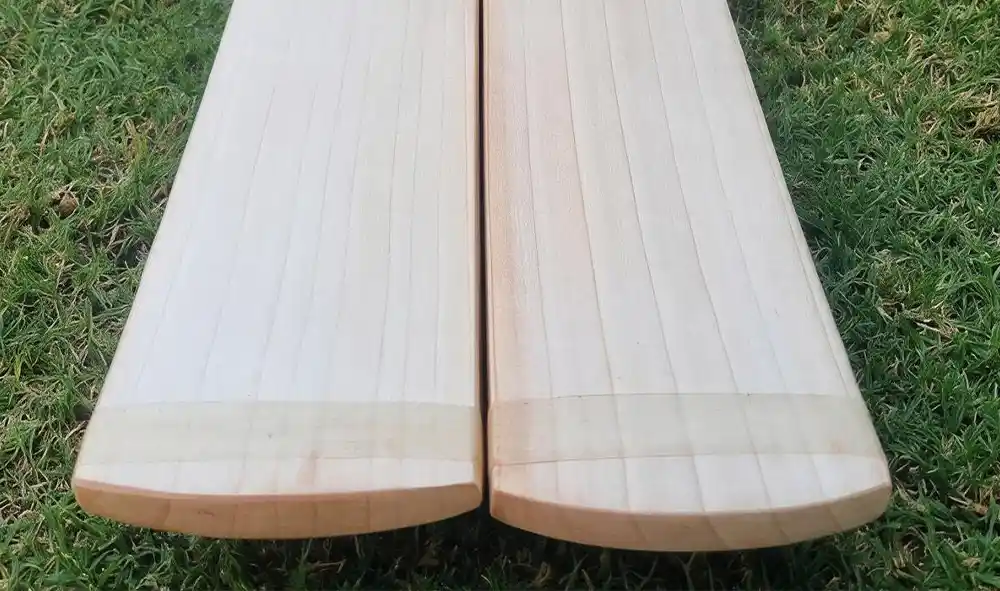
Cricket bat grains are the vertical lines you see on the face of the blade, and they represent the natural growth rings of the willow. Fewer grains, like 5, mean the wood is denser, which makes the bat more durable but slightly slower in response, so it works well for beginners. Around 7 grains offers a good balance between performance and durability, making it a common choice for club level players. Bats with 10 or more grains use more refined willow, feel lighter, and respond faster, which is why professional players often prefer them, though they need more careful maintenance. More grains do not always mean a better bat, it simply helps you choose the right one based on your playing style and budget.

Recent Blog
10 Oct 2026
What Bat Shapes Do Professional Cricketers Use?

29 Sep 2026
Which Cricketers Wear a CA Sports Cricket Helmet?
29 Sep 2026
Lightweight vs. Heavy Duty Wicketkeeping Pads – Which is Best for You
05 Sep 2026
How to Choose the Best Cricket Helmets with Advanced Face Guard Technology

31 Aug 2026
What Protection Does a Fast Bowler Actually Need?

28 Aug 2026
Do You Actually Need a Cricket Arm Guard?

28 Aug 2026
Why Your Helmet and Neck Guard Are Crucial
22 Aug 2026
How to Replace a Cricket Bat Grip?