
Why Your Helmet and Neck Guard Are Crucial
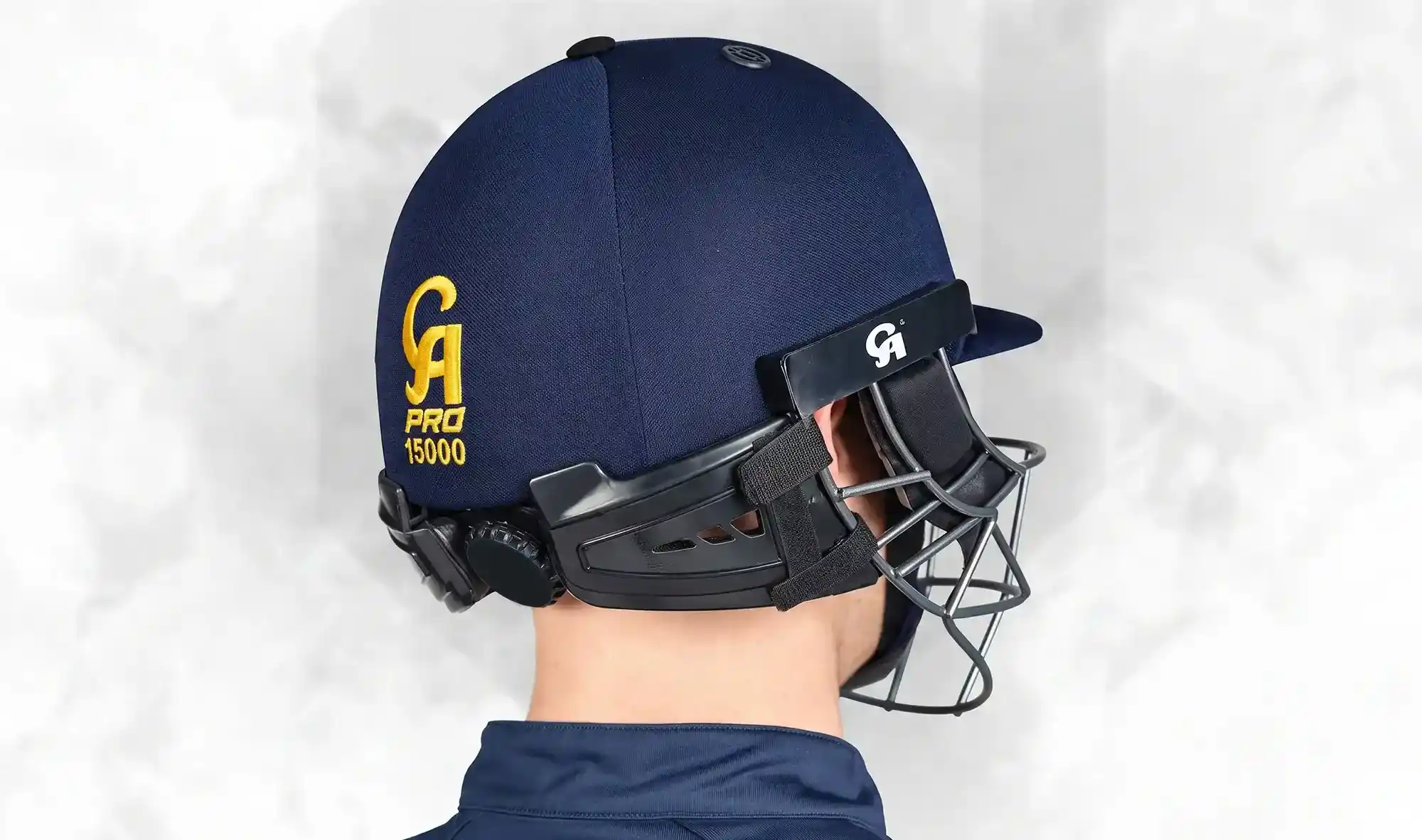
A certified cricket helmet protects your skull, your temples and your face. It does not protect the base of your skull or the top of your neck. That area sits outside the shell, below the back rim and behind your ears.
For most of cricket's history, nobody thought about that gap. That changed in 2014, and it changed again in December 2025.
This guide covers what the game's governing bodies now require, whether a neck guard will even fit the helmet you already own, and how to check your kit properly in about a minute. Some of it will apply to you directly. Some of it will apply to a player you coach or a child you buy gear for.
What a Cricket Neck Guard Actually Is
A cricket neck guard is a padded attachment that clips or straps to the back of a batting helmet. It covers the exposed area between the helmet's rear rim and the shoulders — the base of the skull and the upper neck. It is designed to absorb and spread the force of a ball striking that area.
Modern guards are built from layered impact foams, sometimes combined with a moulded polymer shell. Cricket Australia describes the current generation as weighing under 70 grams and sitting behind the ear line.
Neck guard, neck protector or stem guard — same thing
You will see three names for the same product.
Neck guard — the common retail term
Neck protector — the term used in ICC and ECB regulations
Stem guard — originally a Masuri product name, now used generically
They all describe an attachment covering the rear of the head and neck. When you read a rule that mentions a "head protector," that usually means the complete assembly: helmet, faceguard and neck protector together.
The Gap in Your Helmet and Why It Exists
Helmet shells stop where they do for practical reasons. You need to rotate your head to track a ball. You need to hear your batting partner. Extend the shell too far down the neck and the helmet becomes unwearable.
The result is a small window of unprotected anatomy. Sitting inside it are the cervical spine and the vertebral arteries, the blood vessels running up either side of the neck toward the brain. At that point they are not shielded by bone in the way the brain is shielded by the skull.
This matters because of how the injury happens. A ball striking a helmet shell spreads its force across the whole structure. A hardball striking bare skin below the shell concentrates that force into a very small area.
In November 2014, Australian batter Phillip Hughes was struck on the neck by a bouncer during a Sheffield Shield match. The impact caused a traumatic dissection of a vertebral artery, followed by bleeding around the brain. He died two days later.
In October 2025, a 17-year-old club cricketer, Ben Austin, was struck in the neck during a net session at Ferntree Gully in Melbourne. He was hit by a ball delivered from a hand-held ball thrower. He was wearing a helmet. He was not wearing a neck protector. He died the following day.
Both cases are rare. Cricket remains a comparatively safe sport, and no equipment removes risk entirely. But both show the same thing: the helmet did its job, and the gap below it did not have anything covering it.
How Cricket's Safety Rules Changed
2014 — Phillip Hughes dies. Manufacturers begin producing neck attachments. There is no standard to test them against, so nobody can verify that any of them work.
2019 — This is the important one. Researchers at Loughborough University's Sports Technology Institute, funded by an ICC grant and supported by the ECB, Cricket Australia and the British Standards Institution, develop test methods for neck protectors. Those methods are added to the British Standard, which becomes BS 7928:2013+A1:2019. For the first time, a neck guard can be certified rather than just marketed.
The same team had earlier developed the 2013 facial impact test. Loughborough has reported that test as being 100% effective at reducing serious facial injuries of that type.
2023 — Cricket Australia makes neck protectors mandatory for batters facing fast or medium pace in all CA-sanctioned competitions, from the 2023–24 season.
December 2025 — Following Ben Austin's death, the ECB updates its recreational safety guidance. All cricketers are now strongly advised to wear neck protectors at all times they are required or recommended to wear a helmet. The ECB also advises that bowling machines and ball throwers should be operated only by experienced adults, and never by under-18s.
What the Rules Say for You Right Now
Requirements vary by country and by level. Your own club or league may go further than any of these.
Body | Helmet | Neck protector |
ICC (international) | If a player chooses to wear one, it must comply with BS 7928:2013 | The 2019 amendment added neck protector specifications to the standard |
ECB (England & Wales) | Mandatory for all players under 18 when batting, in matches and practice | Strongly advised for all cricketers whenever a helmet is worn (Dec 2025) |
Cricket Australia | Strongly recommended in community cricket | Mandatory for batters facing pace in CA-sanctioned competitions |
Pakistan and South Asia | ICC standards apply to international cricket | No published national requirement located — check your club and league |
We could not find a publicly available PCB regulation specific to neck protectors in domestic Pakistani cricket. If you play or coach here, the answer is to ask your league directly rather than assume.
Under-18 players
This is the strictest category in world cricket. The ECB's position is that under-18s must wear a head protector when batting against a hard ball, in matches and in practice, and that a parent cannot sign a waiver to opt a child out.
Junior kit has a detail most parents never hear about. Helmets are tested separately against two ball weights: a men's ball of 5½ ounces and a junior ball of 4¾ ounces. The label tells you which one the helmet was tested against. A junior playing with an adult ball needs a helmet tested against the adult ball — not simply a smaller shell.
Women cricketers
There is no women's-specific British Standard and no women's-specific helmet specification. The ICC's guidance is that women should use helmets tested against both ball sizes, or at minimum the junior size. The reason is specific: a women's ball is smaller than a men's ball, and a smaller ball could potentially pass through the gap above the faceguard on a helmet designed around a men's ball.
Wicketkeepers and close fielders
Keepers standing up to the stumps and fielders close to the bat face impacts from short range with almost no reaction time. Head protection is widely recommended for both. Note, though, that the British Standard's testing protocol is built around batting impacts, not fielding ones.
Reading the Label
A compliant modern helmet carries its standard on a label inside the shell. Look for BS 7928:2013+A1:2019 and the ball size it was tested against.
That amendment covers three things: a facial contact test checking whether a ball can penetrate the faceguard or push it back onto the face, separate testing against men's and junior ball sizes, and a coverage and impact test for neck protectors specifically.
One myth worth clearing up. You will see retailers advising you to buy an "ICC-approved helmet." No such approval exists. The ICC does not test or approve helmets. It references the British Standard, and BSI-accredited laboratories do the testing. If a listing says "ICC approved" and shows no BS number, treat that as a warning sign.
A second one: steel versus titanium grille is a decision about weight, comfort and budget. Both pass the same standard. Titanium is lighter and costs more. Neither is safer.
The 60-second helmet check
Do this before your next session.
Find the label: Inside the shell. Note the standard and the ball size.
Check the peak-to-grille gap: Older non-compliant helmets often have a wide gap here. A ball can pass through it.
Check the peak itself: Thin, flexible peaks are a sign of an older design.
Check the grille fittings: Adjustable grilles with visible white nuts usually indicate a pre-2013 helmet.
Check the fit: Fasten the strap and look straight ahead. The helmet should not rock or slide. The grille should sit clear of your face.
Check the impact history: If it has taken a hard blow, it needs replacing — see below.
Will a Neck Guard Fit My Helmet?
Start with the question most guides skip.
Does your helmet have attachment points at all? Look at the rear rim and the lower grille bars for moulded clips, slots or fixing tabs. Many older helmets and most budget helmets have none. If yours has no attachment points, no guard will fit it securely, and improvising one is not a solution.
If your helmet does have them, the second rule is brand compatibility. Neck guards are generally not universal. Some manufacturers also split senior and junior fittings within their own range. Buy the guard made for your specific helmet model, and check the manufacturer's compatibility list rather than assuming.
Attachment types fall into three groups:
Clip-on — moulded clips onto the shell or grille, often with a securing tie
Strap or velcro — wraps around the rear of the helmet
Integrated — some newer helmets ship with the guard included
If your helmet has no attachment points, the honest answer is that the helmet is the limiting factor, not the guard.
"It Feels Uncomfortable" the Real Objection
Almost nobody argues that neck guards don't work. They argue that they don't like wearing them.
That objection has serious names behind it. Steve Smith said neck protectors made him feel claustrophobic. David Warner resisted wearing one for years. Both went on to wear them once Cricket Australia made them mandatory.
There is also a data point on the other side. In 2023, Australian all-rounder Cameron Green was struck on the neck guard fixed to his helmet by a Kagiso Rabada bouncer. He was substituted with concussion. The guard was in the right place.
Three practical points:
Weight is not the issue it once was. Under 70 grams is roughly the weight of a golf ball.
Movement improves with familiarity. The complaint is usually about a new sensation, not restricted vision.
Break it in at training. Wear it for a full net session before a match. Most players stop noticing it within a few sessions.
The Risk Nobody Talks About: Nets and Throwdowns
Ben Austin was not in a match. He was in the nets.
Ball throwers — often called dog sticks — and bowling machines can deliver at real pace with less predictability than a bowler. The ECB now advises that neither should be operated by under-18s, and that adults using them should be experienced with them.
If you coach or run an academy, the rule is simple: practice deserves match-level protection. That includes throwdowns, machine sessions and knocking a ball around before play.
When to Replace Your Helmet and Neck Guard
The ICC's guidance is unambiguous and worth quoting in plain terms: any head protector component that takes a severe blow needs replacing, even if you cannot see any damage. Protective foams work by crushing. Once crushed, they do not come back.
Beyond impacts:
Age: Many retailers suggest around three years of regular use as a working guide. This is convention rather than a requirement in the standard.
Growth: Juniors outgrow helmets faster than helmets wear out. A loose helmet does not protect properly.
Visible signs: Cracks, dents, compressed padding, frayed straps, corroded grille fittings.
When the helmet, not the guard, is the problem
If your check turned up no BS label, a wide peak-to-grille gap, a thin peak, or no attachment points for a guard, adding accessories will not fix it. That helmet has reached the end of its useful life, and replacing it is the higher-value decision.
Buying in Pakistan and Overseas
Cricket gearsells through a wide informal market across Pakistan and South Asia, and quality varies enormously at similar price points.
What to check physically, before you take any marketing claim at face value:
Attachment points: Present or absent — decides whether the helmet can ever take a guard.
Peak rigidity: Press it. A thin, flexible peak is a design generation behind.
Grille alignment: Sight down the peak-to-grille gap.
Padding quality: Thin or uneven internal padding affects both fit and impact performance.
Certification claims: If a listing claims a standard, the label should be physically inside the helmet. If the claim exists only in the product description, treat it as unverified.
Fit matters more than any single feature. A well-fitting mid-range helmet outperforms an expensive one that slides on your head.
Conclusion
A helmet without a neck guard leaves a small but genuinely vulnerable area exposed. The game's governing bodies have moved steadily toward treating both as one piece of equipment — and after December 2025, that direction is clear.
Start with what you already own. Find the label. Check the peak, the grille and the fit. Look for attachment points at the back. That check takes a minute and tells you whether your current helmet can carry the protection the modern game expects.
If it can't, that's the piece worth replacing first.
Browse CA Sports cricket helmets → Manufactured in Sialkot since 1958. Senior and junior sizing across the range.
FAQ's
Is a neck guard compulsory in cricket?
It depends on where and at what level you play. Cricket Australia makes them mandatory for batters facing pace in its sanctioned competitions. The ECB strongly advises them whenever a helmet is worn. There is no universal global rule for recreational cricket.
What is a stem guard?
Another name for a neck guard. The term comes from an early Masuri product and is now used generically.
Will any neck guard fit my helmet?
No. Guards are usually designed for a specific brand, and often a specific model range. Check the manufacturer's compatibility list.
Can I add a neck guard to an old helmet?
Only if the helmet has proper attachment points. Many older helmets do not.
Are cricket helmets ICC approved?
No. The ICC references the British Standard, BS 7928:2013+A1:2019. Certification is done by accredited testing laboratories, not the ICC.
Is a junior helmet different from a small adult helmet?
Yes. Helmets are tested against either a men's ball, a junior ball, or both, and the label says which. A junior playing with an adult ball needs a helmet tested against the adult ball.
Is a men's helmet safe for a woman?
There is no women's-specific standard. The ICC recommends helmets tested against both ball sizes, or at least the junior size, because a smaller ball could pass through the gap above a men's faceguard.
Do wicketkeepers and close fielders need neck guards?
Head protection is widely recommended for both. Note that the British Standard's tests are designed around batting impacts.
How often should I replace my helmet?
Immediately after any severe impact, even with no visible damage. Otherwise, around three years of regular use is a common retailer guideline.
Do I need a helmet in the nets?
Yes. The most recent fatality in cricket happened during a practice session, not a match.
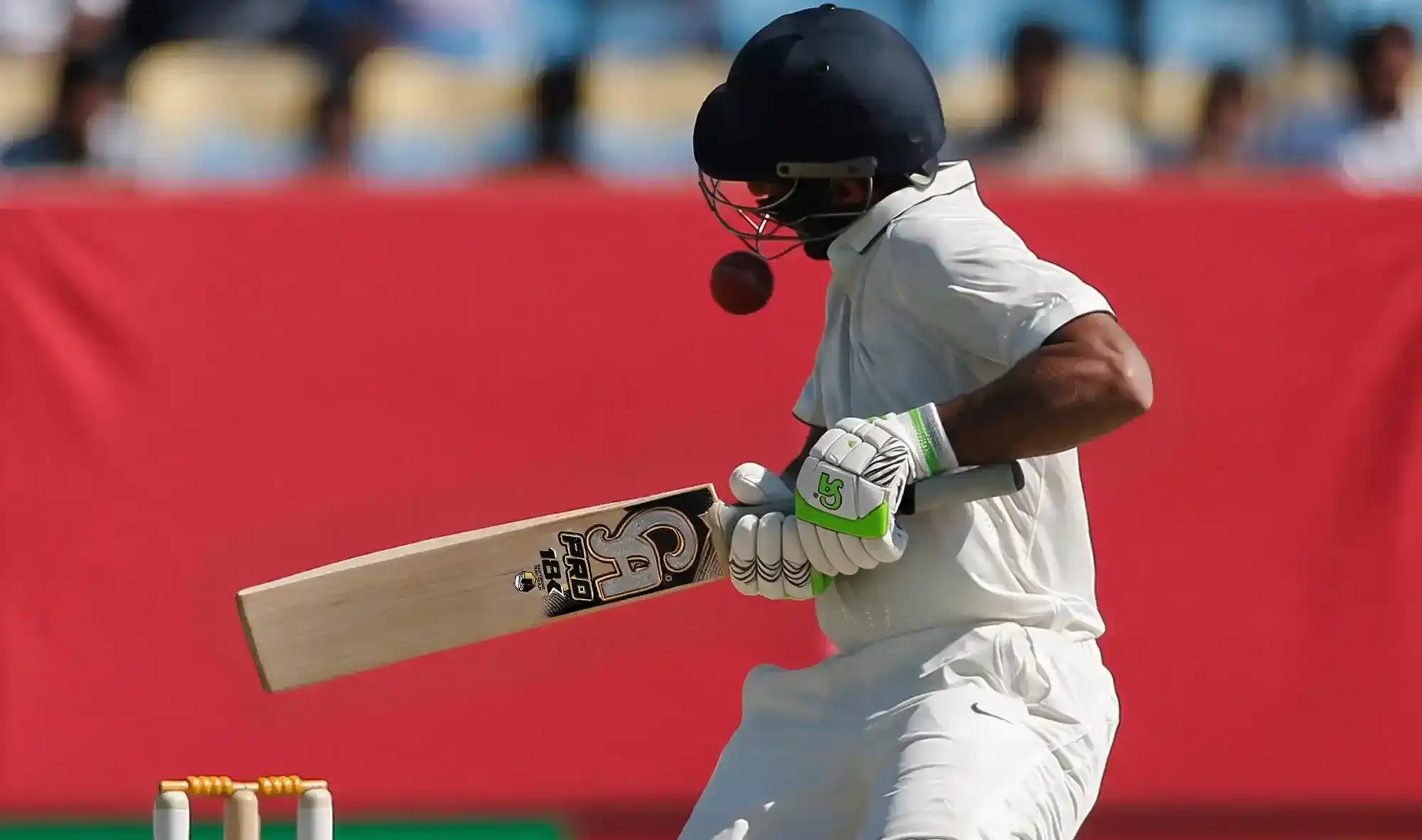
A cricket helmet protects your head from serious impact, while a neck guard adds protection to the vulnerable area below the helmet. Together, they provide more complete protection against fast deliveries, especially when playing hardball cricket.

Recent Blog
10 Oct 2026
What Bat Shapes Do Professional Cricketers Use?
29 Sep 2026
Which Cricketers Wear a CA Sports Cricket Helmet?
29 Sep 2026
Lightweight vs. Heavy Duty Wicketkeeping Pads – Which is Best for You
05 Sep 2026
How to Choose the Best Cricket Helmets with Advanced Face Guard Technology
31 Aug 2026
What Protection Does a Fast Bowler Actually Need?
28 Aug 2026
Do You Actually Need a Cricket Arm Guard?
28 Aug 2026
Why Your Helmet and Neck Guard Are Crucial
22 Aug 2026
How to Replace a Cricket Bat Grip?