
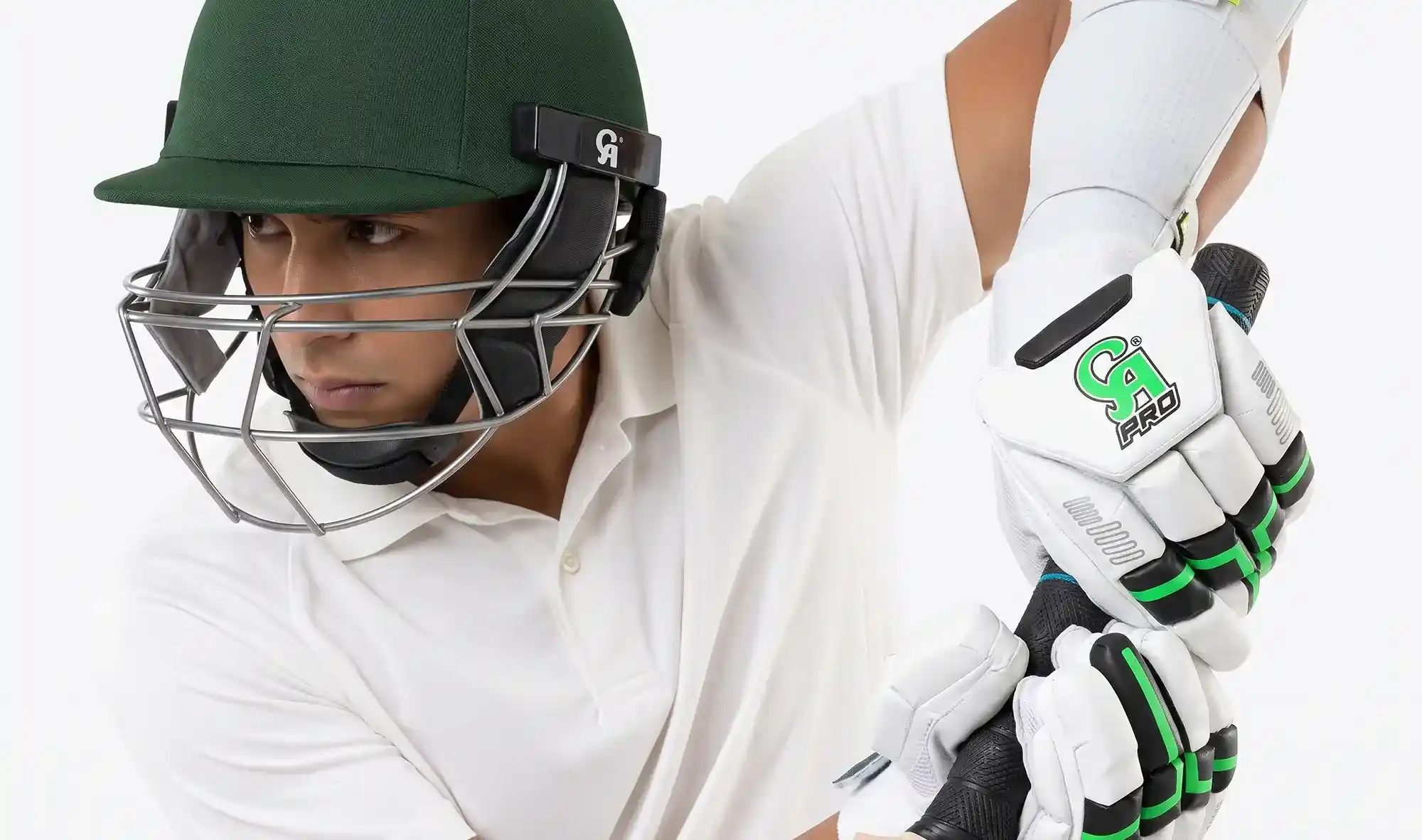
Do You Actually Need a Cricket Arm Guard?
Most guides about cricket arm guards answer the wrong question. They explain what an arm guard is, then tell you that you must wear one.
The real question is different. Is an arm guard worth wearing for the cricket you actually play?
For some players, clearly yes. For others, honestly, no. This guide explains which group you fall into, which arm the guard goes on, how it differs from an elbow guard, and what the game's governing bodies actually say. Where the evidence is thin, we say so.
What a Cricket Arm Guard Is (and What It Isn't)
A cricket arm guard is a padded protector strapped to the batter's leading forearm — the arm closest to the bowler. It absorbs and spreads the impact of a ball striking the forearm. It is optional equipment, not a required kit.
Most guards use layered impact foam, sometimes with a moulded insert for extra rigidity. They fasten with elastic and velcro straps, or slip on like a sleeve. Designs fall into three broad groups:
Strap-on — a padded panel held by adjustable straps. The most common style.
Slip-on or sock style — pulls over the forearm for a closer fit.
Moulded — a shaped shell over foam, offering more rigidity and usually more bulk.
Arm Guard vs Elbow Guard vs Arm Sleeve
These three products get confused constantly, and buying the wrong one is an easy mistake.
Product | What it covers | Purpose |
Elbow guard | The elbow joint | Protects the joint from direct impact |
Arm guard (forearm guard) | Forearm, extending toward the wrist | Protects the length of the exposed forearm |
Arm sleeve | Forearm, thin compression fabric | Sun protection and grip. Not impact protection. |
Some products combine elbow and forearm coverage in one piece. The simple rule: if you are worried about being hit by the ball, you want impact padding, not a compression sleeve. A sleeve will not protect you.
Why the Leading Forearm Gets Hit
Stand in a batting stance and look at where your arms sit. Your leading arm (the left arm for a right-handed batter, the right arm for a left-hander) is the one closest to the bowler and slightly ahead of your body.
Now consider the line the ball travels. The Laws of Cricket define bowling over the wicket as the bowler running up with the stumps on the same side as their bowling arm, and round the wicket as the opposite. A right-arm bowler going over the wicket to a right-handed batter is delivering from a line that runs across the batter's body — and the leading forearm sits directly in that path.
Add height and the risk grows. A ball that rises off a length arrives around chest and glove height. At that point the batter has three options: play it, duck, or take it on the body. When the shot is late or the bounce is unexpected, the forearm is often what the ball finds first.
This is why the exposure is not evenly spread. It concentrates on short-pitched bowling, uneven bounce, and genuine pace.
Which Arm Does It Go On?
The guard goes on the leading arm — the top-hand arm.
Right-handed batter: left arm
Left-handed batter: right arm
Some guards are ambidextrous and shaped to fit either arm. Others are shaped for one side only. Check before ordering, because a guard shaped for the wrong arm will sit awkwardly and slide.
Wearing a guard on the bottom arm is uncommon. In a normal stance that arm is tucked behind the bat and body, and is far less exposed.
The Honest Answer: How Often Do Cricketers Get Hit on the Arm?
In its Recreational Cricket Safety Guidelines, the England and Wales Cricket Board sets out which protective equipment it recommends and why. On arm guards, the ECB states that "injuries to the arm area are less frequent but still do occur when batting", and that some players choose to wear one for that reason.
The same document ranks other areas more highly. The ECB says the fingers and hands are the most injured body parts in cricket, which is why batting gloves matter so much. It says evidence indicates the thigh is the second most common injury site in recreational cricket, which is why it recommends thigh pads.
Two important caveats. This is the ECB's assessment of recreational cricket in England and Wales — it is not a global statistic, and conditions in Pakistan differ. And "less frequent" is a comparison against the other body areas listed, not a claim that arm injuries are rare in absolute terms.
So what does this actually tell you?
An arm guard is not the first piece of protection you should buy. A properly fitting helmet, batting gloves and pads come first, and for most players a thigh pad comes next. Any guide that tells you forearm protection is non-negotiable is selling, not advising.
But "less frequent" is not "never." A forearm strike from a hard ball hurts badly, can bruise deeply enough to keep you out for weeks, and in some cases fractures bone. It is also highly preventable with a light, inexpensive piece of kit. The question is whether your situation puts the forearm in the firing line often enough to justify it.
Common Reasons Some Cricketers Choose Not to Wear an Arm Guard
Plenty of good players never wear one. These are the reasons commonly given. They are not the only reasons, and they are not equally valid for everyone.
"The pitches I play on don't bounce." Fair, up to a point. On low, slow surfaces the ball rarely reaches forearm height off a length. But bounce varies with the surface, the ball's age, and the bowler. Worn or uneven pitches produce exactly the unpredictable lift that catches batters out.
"My technique keeps me out of trouble." Also fair, for genuinely good players facing bowling they can read. The gap in this reasoning is that being hit is usually the result of a misjudgement, not a lack of skill. Good players misjudge occasionally too.
"It restricts my movement." This is the most substantive objection. A bulky or badly fitted guard can interfere with wrist rotation and bat swing, which affects timing on cuts and pulls. It is a real trade-off — and it is mostly a fit and design problem rather than an argument against arm guards in principle. A slim guard that sits properly should not change how you play.
"It's too hot." A genuine issue in Pakistani conditions, particularly over long innings in summer. Guards with breathable linings help, but nobody should pretend an extra layer on your arm is invisible in 40°C heat.
Notice what is missing from that list: nobody argues that arm guards fail to protect. The debate is about cost, comfort and necessity — which is a legitimate debate to have.
Who Genuinely Benefits from an Arm Guard
Rather than a blanket recommendation, here is an honest segment-by-segment view.
Strong case — worth wearing:
Batters facing genuine pace. The faster the bowling, the less reaction time and the harder the impact.
Players on bouncy or uneven surfaces. Unpredictable lift is the main driver of forearm strikes.
Anyone returning from a forearm injury. Protecting healing bone or deep bruising is straightforward risk management.
Net sessions and bowling machines. You face far more deliveries in the nets than in a match, often against repeated short-pitched bowling. If you own a guard, this is where it earns its place.
Reasonable case — worth considering:
Juniors developing technique. Young players are still learning to judge length and are more likely to be caught in an awkward position. Sizing matters here: an adult guard on a smaller arm will sit wrongly and cover the wrong area. Look for a guard proportioned for a younger player rather than a scaled-down adult one, and re-check the fit each season as they grow.
Top-order batters facing the new ball. Hardest ball, freshest bowlers, most movement.
Players who have been hit before. Confidence is a real performance factor. If a previous blow has made you flinch at short bowling, a guard that lets you play freely is doing useful work.
Weak case — probably unnecessary:
Players facing mostly spin or gentle medium pace on low, slow pitches.
Lower-order batters who face few deliveries.
Anyone who has never been troubled at forearm height and plays on consistent surfaces.
Hardball vs Tape-Ball: A Different Calculation
Most cricket played in Pakistan is not hardball. Tape-ball and softball formats dominate streets, grounds and tournaments across the country — and the protection maths changes completely.
The ECB draws this distinction explicitly. It states that protective equipment is mandatory in certain situations when cricket is played with a hard ball, but is not currently mandatory in softball cricket, where a player may wear protection if they choose to.
That reflects physics. A taped tennis ball is lighter and softer, and transfers far less energy on impact. A hard cricket ball weighs between 140 and 166 grams by ECB's own figures and is extremely hard.
Practical guidance:
Hardball cricket — matches, club, school, academy, or nets with a leather ball. Full protective kit applies, and an arm guard is a reasonable addition depending on the factors above.
Tape-ball cricket — an arm guard is generally unnecessary. A forearm strike will sting, not fracture.
The grey zone — hard tape-balls, heavy taping, and genuinely quick tape-ball bowlers narrow the gap. Judge it on the ball and the bowler, not the format's name.
If you are moving a young player from tape-ball into hardball, that transition is the moment to review their protection properly.
Getting the Fit Right
A guard only protects the area it actually covers. If it slides down your arm during a session, the padding is no longer where the ball is likely to arrive.
Sizing: measure your forearm from just below the elbow to just above the wrist. Buy for that length, not by generic small/medium/large. A guard that is too long fouls your wrist and elbow. Too short and it leaves the upper forearm bare.
Strap tension: snug enough that the guard does not rotate around your arm. Loose enough that you can bend your elbow fully and feel no pinching or numbness.
The 30-second check:
Fit the guard and take your normal stance.
Play a forward defensive, a pull and a cut in slow motion.
Check whether the guard has rotated or slipped.
Check that your wrists move freely through the shot.
Then bat with it for a full net session before using it in a match.
That last step matters. Wearing an unfamiliar guard for the first time in a match is how players decide they dislike arm guards, when the real problem was that they had never adjusted to it.
Are Arm Guards Required by Any Cricket Rules?
Short answer: arm guards are permitted everywhere and required almost nowhere — but the picture has four distinct levels, and your own competition sits at the bottom of it.
Level | Position on arm guards |
MCC Laws of Cricket | Permitted, not required |
ICC | No published arm guard standard located |
National boards (ECB) | Recommended, not mandatory |
Your club, school or league | Can set its own rules — check |
When to Replace Your Arm Guard
Protective foam works by compressing. Once it has compressed, it does not fully recover — and it can look completely fine while offering less protection than it did.
Replace or reassess when you see:
Permanent dents or thinning in the padding, especially where you have been struck
Straps that have lost elasticity or velcro that no longer grips
Cracks or splits in any moulded insert
A guard your junior has outgrown — check each season
If you take a heavy blow directly on the guard, inspect it carefully afterwards.
Looking After It in Pakistan's Heat
Sweat and sunlight are both hard on foam and fabric.
Wipe the lining down after every session.
Air-dry in the shade, never in direct sun. UV exposure degrades foam and weakens straps.
Store it in your kit bag out of the heat, not in a car boot.
Do not machine wash unless the manufacturer says it is safe.
What to Look For When Buying
With no published safety standard for arm guards, you are judging the product yourself. Focus on the things you can actually assess:
Padding depth and coverage. Does it cover the full length of your forearm, or only a section?
Profile. Slimmer guards restrict movement less. Bulkier guards protect more. Pick the trade-off that suits your cricket.
Straps. Wide, soft, adjustable straps distribute pressure. Thin elastic digs in over a long innings.
Lining. Breathable material matters more in Pakistani conditions than it does in England.
Stitching and edges. Loose stitching and rough seams are the first things to fail.
CA Sports manufactures the CA PRO Arm Guard as part of its senior arm and thigh guard range, made in Sialkot.
One warning specific to this market. Counterfeit protective gear is a genuine problem in informal retail across Pakistan. Fake gear copies the branding, not the padding — and protective equipment that only looks the part is worse than useless, because you will trust it. Buy from a source you can verify. CA Sports lets you check whether your gear is genuine and publishes its authorised dealer list.
Conclusion
An arm guard is not essential kit. Your helmet, gloves and pads come first, and for most club players so does a thigh pad. The ECB's own guidance places arm injuries below hands and thighs in frequency, and that is worth being honest about.
But if you face real pace, bat on surfaces with uneven bounce, spend serious time in the nets, or have been hit before and now flinch at short bowling — an arm guard is a small, light, inexpensive way to remove a painful and avoidable injury from the equation.
FAQ's
Do I need an arm guard to play cricket?
Ans: No. It is optional equipment everywhere we could verify. Whether it is worth wearing depends on the pace you face, the bounce of your pitches, and your own history of being hit.
Which arm does a cricket arm guard go on?
Ans: The leading arm — left for a right-handed batter, right for a left-hander. Some guards fit either arm; others are shaped for one side.
Is an arm guard the same as an elbow guard?
Ans: No. An elbow guard covers the joint. An arm guard covers the forearm and extends toward the wrist. Some products combine both.
Are arm guards compulsory in cricket?
Ans: Not under the Laws of Cricket, which permit them without requiring them. The ECB recommends rather than mandates them. Individual clubs and leagues can set stricter rules, so check your own competition.
Do professional cricketers wear arm guards?
Ans: Some do, some do not. It is a personal choice at every level of the game.
Will an arm guard slow down my batting?
Ans: A poorly fitted or bulky guard can restrict wrist movement and affect timing. A slim guard that fits correctly should not. Test yours in the nets before a match.
Do I need an arm guard for tape-ball cricket?
Ans: Generally no. A taped tennis ball transfers far less energy than a hard ball. Judge it on how hard the ball is and how quick the bowler is.
Should juniors wear arm guards?
Ans: It is worth considering, especially for young players still learning to judge length. Fit matters more than for adults — an oversized guard will not sit over the area it needs to protect.
How tight should an arm guard be?
Ans: Snug enough that it does not rotate on your arm, loose enough that you can bend your elbow fully with no pinching or numbness.
Is there a safety standard for cricket arm guards?
Ans: Not one we could find. Helmets must meet British Standard BS 7928 in international cricket, but no comparable published standard for arm guards was located.
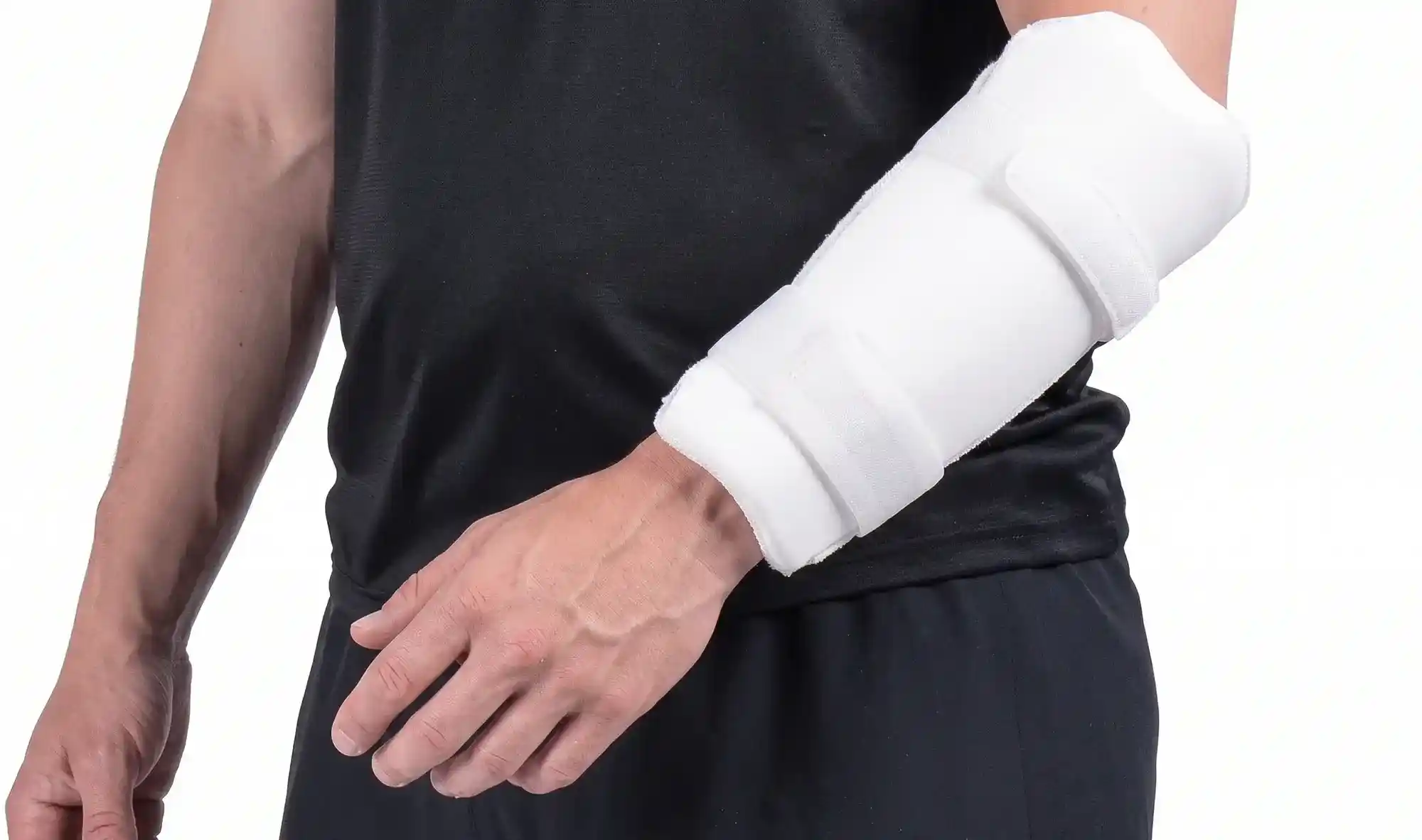
Arm guards are not compulsory equipment in cricket, but they provide crucial protection against short-pitched bowling and severe forearm injuries [199-1]. Additionally, modern lightweight arm guards offer a psychological boost for batters facing fast deliveries on unpredictable pitches. You can read the full article on The Role of Arm Guards in Modern Cricket Batting.

Recent Blog
10 Oct 2026
What Bat Shapes Do Professional Cricketers Use?
29 Sep 2026
Which Cricketers Wear a CA Sports Cricket Helmet?
29 Sep 2026
Lightweight vs. Heavy Duty Wicketkeeping Pads – Which is Best for You
05 Sep 2026
How to Choose the Best Cricket Helmets with Advanced Face Guard Technology

31 Aug 2026
What Protection Does a Fast Bowler Actually Need?
28 Aug 2026
Do You Actually Need a Cricket Arm Guard?
28 Aug 2026
Why Your Helmet and Neck Guard Are Crucial
22 Aug 2026
How to Replace a Cricket Bat Grip?