
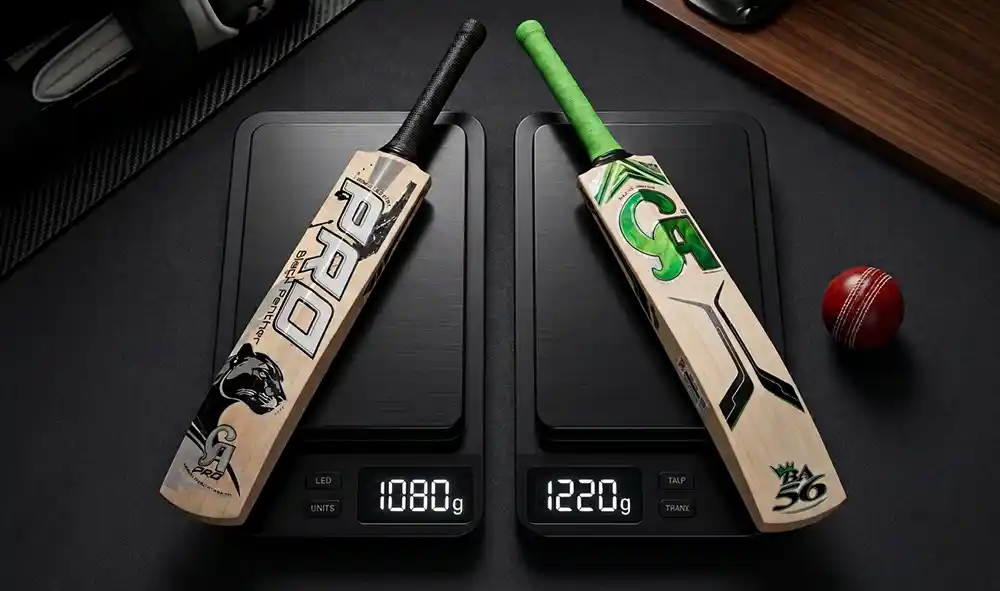
Lightweight vs Heavyweight Cricket Bat: Which Should You Buy?
Quick answer:
A lightweight cricket bat is easier to swing and control, which helps with timing and fast footwork. A heavyweight cricket bat carries more mass, which can help on mishits and big hitting. The right choice depends on your strength, age, playing style, and how the bat feels when you pick it up. For most players, a bat you can swing comfortably for a full innings beats a heavier one that tires your arms.
This guide breaks down the lightweight bat and heavyweight bat debate in simple terms, so you can buy with confidence.
Lightweight vs Heavyweight Cricket Bat: What Is the Difference?
The difference is the actual mass of the bat, usually measured in pounds and ounces (or grams). Most senior cricket bats weigh between about 2 lb 7 oz and 3 lb (roughly 1.1 kg to 1.4 kg).
- A lightweight cricket bat usually sits at the lower end of that range.
- A heavyweight cricket bat sits at the higher end.
But here is the key point many players miss: the number printed on the sticker is only part of the story. How a bat feels in your hands, called the pickup, matters just as much. We will come back to that.
What Is a Lightweight Cricket Bat?
A lightweight cricket bat is one built at the lower end of the weight range, often around 2 lb 7 oz to 2 lb 9 oz for a senior bat.
Players tend to like lightweight bats because they are easy to lift, quick through the line of the ball, and simple to control for late shots and quick singles. They also put less strain on your arms and wrists, which helps you stay sharp deep into an innings.
The trade-off is that a lighter bat carries less mass behind the ball. On a clean hit, this is rarely a problem, but on a slight mishit you may feel you get less on it.
What Is a Heavyweight Cricket Bat?
A heavyweight cricket bat is built at the higher end of the range, often around 2 lb 12 oz and above for a senior bat.
The appeal is momentum. When a heavier bat meets the ball cleanly, it can carry good force through the shot, and the extra mass can help on off-centre hits. Stronger players who like to hit through the line often prefer this feel.
The downside is control. A heavier bat is harder to swing quickly, which can slow your bat speed and hurt your timing, especially against faster bowling or late in a long innings when your arms tire.
Lightweight vs Heavyweight Cricket Bat: Key Differences
Here is a simple side-by-side comparison:
Feature | Lightweight Bat | Heavyweight Bat |
Typical senior weight | ~2 lb 7 oz – 2 lb 9 oz | ~2 lb 12 oz and up |
Bat speed | Faster, easier to swing | Slower to swing |
Control & timing | Easier to control | Needs more strength |
Feel on mishits | Less mass behind the ball | More mass can help |
Best for | Timing, footwork, longer innings | Strong players, power hitting |
Arm fatigue | Lower | Higher |
Which Bat Weight Is Better for Your Playing Style?
Match the bat to how you actually play:
- Timing and technique players who rely on placement and footwork usually do well with a lighter or medium bat.
- Power hitters with good strength may enjoy a slightly heavier bat, as long as they can still swing it freely.
- All-format club players are often best with a balanced, medium-weight bat that does a bit of everything.
A useful test: shadow-play your favourite shots in the shop or nets. If the bat pulls your hands down or feels slow, it is too heavy for you right now.
How to Choose the Right Cricket Bat Weight
Follow these practical steps:
- Pick the bat up and hold it out. If your wrist wobbles or your arm tires within a minute, go lighter.
- Play a few air shots. The bat should feel like an extension of your arms, not a weight you are fighting.
- Judge the pickup, not just the sticker weight. A well-balanced 2 lb 11 oz bat can feel lighter than a poorly balanced 2 lb 9 oz bat.
- Think about your format. Longer innings and faster bowling reward a bat you can control.
- Be honest about your strength and age. You can always move up in weight as you grow stronger.
When in doubt, choose the lighter option. It is easier to add power with good timing than to fix poor timing caused by a heavy bat.
Does Bat Weight Affect Power and Bat Speed?
Both matter, and they work against each other. A heavier bat carries more mass, but a lighter bat lets you swing faster. Power comes from a mix of bat speed, timing, and clean contact, not weight alone. This is why a smaller player with quick hands can hit a lighter bat a long way, while a heavy bat swung slowly may produce less. Aim for the heaviest bat you can still swing quickly and control.
English Willow vs Kashmir Willow: Does Weight Matter?
Willow type changes how weight feels, not just the number:
- English willow is softer and lighter for its size, with a responsive feel. It usually offers better performance and is the choice for club, league, and serious players. English willow bats often need knocking in before use.
- Kashmir willow is denser and harder, so a Kashmir willow bat can feel firmer and sometimes heavier in the hand. It is tougher and more affordable, which makes it a sensible pick for beginners, tennis-ball and casual cricket.
If you are comparing two bats of the same listed weight, the willow type and balance will still make them feel different. Always judge the pickup yourself. You can browse handcrafted options on the CA Sports English willow bats page, with Kashmir willow choices in the wider CA Sports cricket bats range.
Lightweight or Heavyweight Bat for Beginners?
Beginners should almost always start with a lighter, well-balanced bat. A lighter bat helps you learn correct technique, build good timing, and enjoy your cricket without tiring quickly or straining young wrists.
For children and teenagers, use the correct junior bat size (such as Size 6, Harrow, or Academy) rather than a heavy senior bat. Parents buying for a growing player should size for now, not for "growing into," since a bat that is too heavy can harm a young player's technique.
Which Cricket Bat Should You Buy?
Here is a simple recommendation by player type:
- New or young players: A lighter, correctly sized bat, often in durable Kashmir willow to start.
- Regular club players: A balanced, medium-weight English willow bat for all-round play.
- Strong, aggressive batsmen: A slightly heavier bat with a good pickup you can still swing freely.
The best cricket bat is the one that feels right in your hands and suits your game. For handcrafted options across weights and willow grades, the CA Sports cricket bats collection covers junior, club, and professional-level bats with worldwide delivery. Once you have your bat, protect it with a proper cricket bat care routine.
FAQs
What is the best cricket bat weight?
There is no single best weight. For most senior players, a bat between about 2 lb 8 oz and 2 lb 11 oz with a good pickup offers a strong balance of control and power. Choose the heaviest bat you can still swing quickly and comfortably.
Is a lightweight or heavyweight cricket bat better for beginners?
A lightweight, correctly sized bat is better for beginners. It helps build good technique and timing, and reduces the risk of strain, especially for younger players.
Does a heavier cricket bat hit the ball further?
Not always. A heavier bat carries more mass, but if it slows your swing, it can produce less power. Distance comes from bat speed, timing, and clean contact together, not weight alone.
What is bat pickup, and why does it matter?
Pickup is how heavy a bat feels when you lift and swing it, based on how the weight is spread along the blade. Two bats of the same listed weight can have a very different pickup, so always test it yourself.
Does Kashmir willow weigh more than English willow?
Kashmir willow is denser and often feels firmer or heavier in the hand than English willow of a similar size. English willow is lighter for its size and usually offers better performance, while Kashmir willow is tougher and more budget-friendly.
How do I know if my cricket bat is too heavy?
Hold the bat out at arm's length and play a few air shots. If your wrist wobbles, your arm tires quickly, or your bat speed drops, the bat is too heavy and you should try a lighter option.
Final word
The lightweight bat and heavyweight bat choice is about fit, not fashion. Lighter does not automatically mean better, and heavier does not automatically mean more power. Judge the pickup, match the bat to your strength and style, and pick the one you can swing all innings freely. When you are ready, compare weights and willow grades in the CA Sports cricket bats range.

Choosing between a lightweight and heavyweight cricket bat comes down to what feels right for you. Some players enjoy the quick pickup and better control of a lightweight bat, while others prefer the extra power a heavier bat can deliver. Instead of focusing only on the weight, choose a bat that matches your playing style, strength, and comfort. The right bat should feel natural in your hands and help you play with confidence.

Recent Blog
10 Oct 2026
What Bat Shapes Do Professional Cricketers Use?
29 Sep 2026
Which Cricketers Wear a CA Sports Cricket Helmet?
29 Sep 2026
Lightweight vs. Heavy Duty Wicketkeeping Pads – Which is Best for You
05 Sep 2026
How to Choose the Best Cricket Helmets with Advanced Face Guard Technology

31 Aug 2026
What Protection Does a Fast Bowler Actually Need?
28 Aug 2026
Do You Actually Need a Cricket Arm Guard?
28 Aug 2026
Why Your Helmet and Neck Guard Are Crucial
22 Aug 2026
How to Replace a Cricket Bat Grip?